Kinetic Chandelier
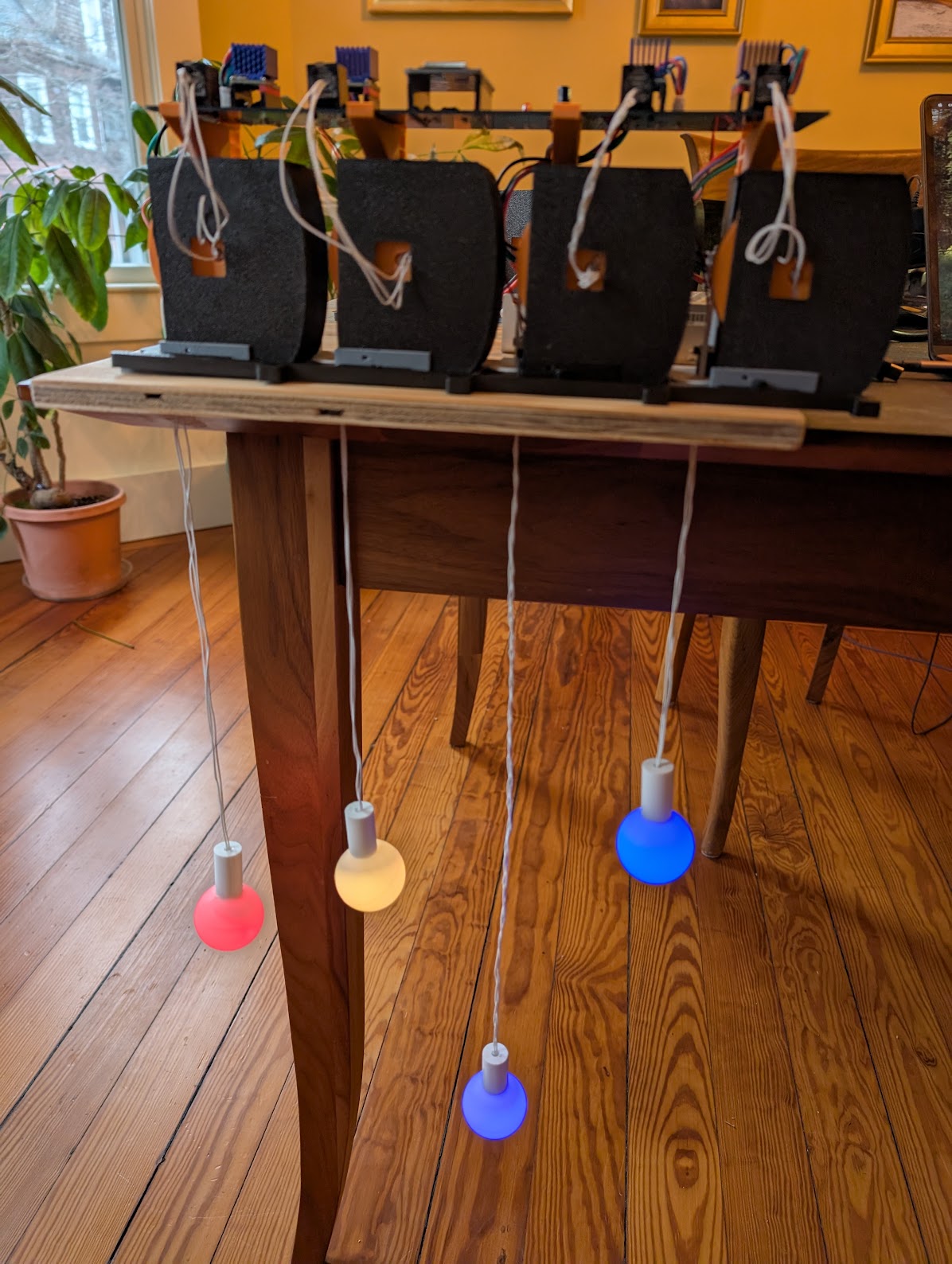
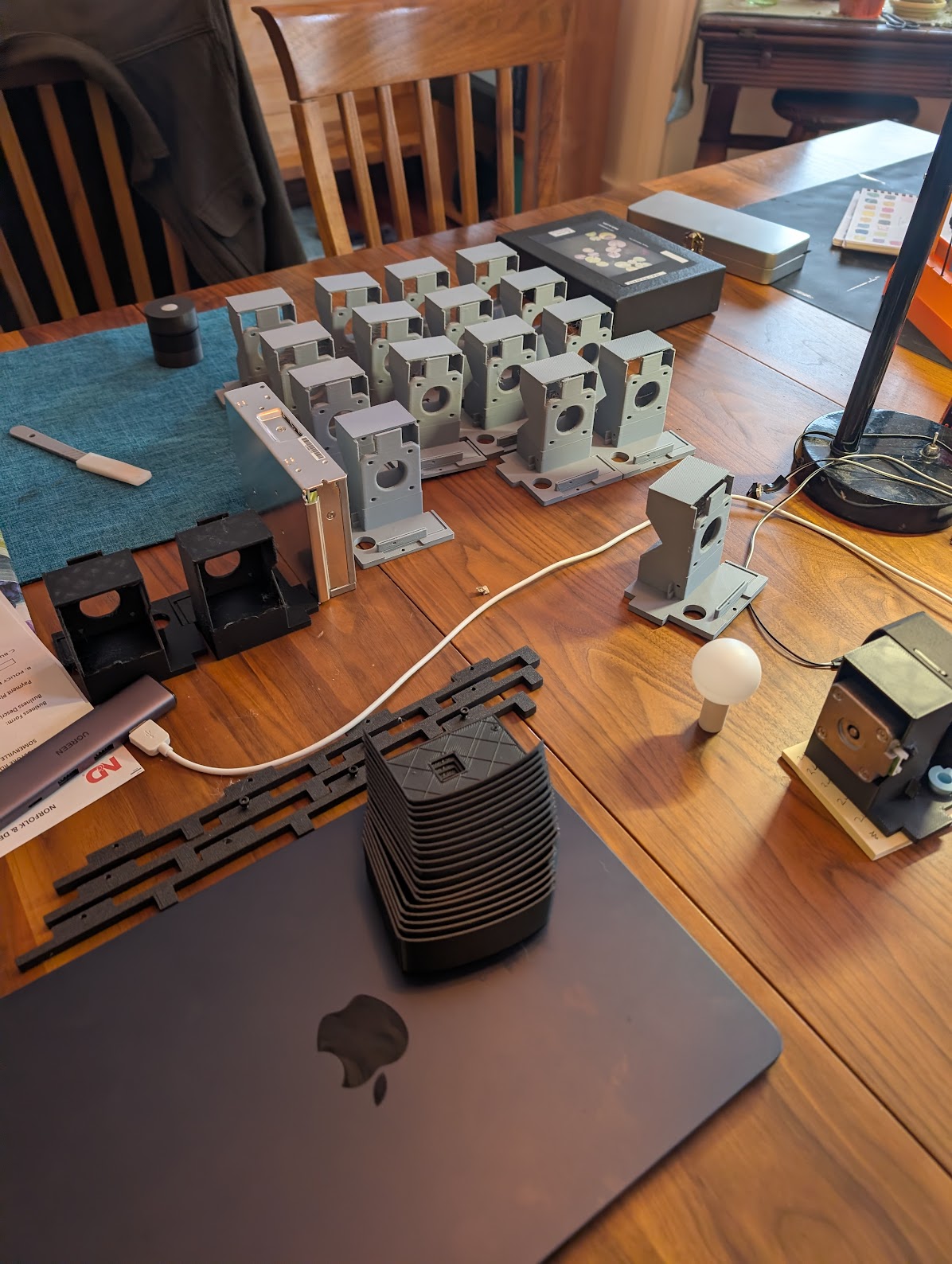
Version 2.0The build of Chandelier 1.0 is documented below; that version ended up being very unreliable for a number of reasons. This winter I finished version 2, and it's better in every way.
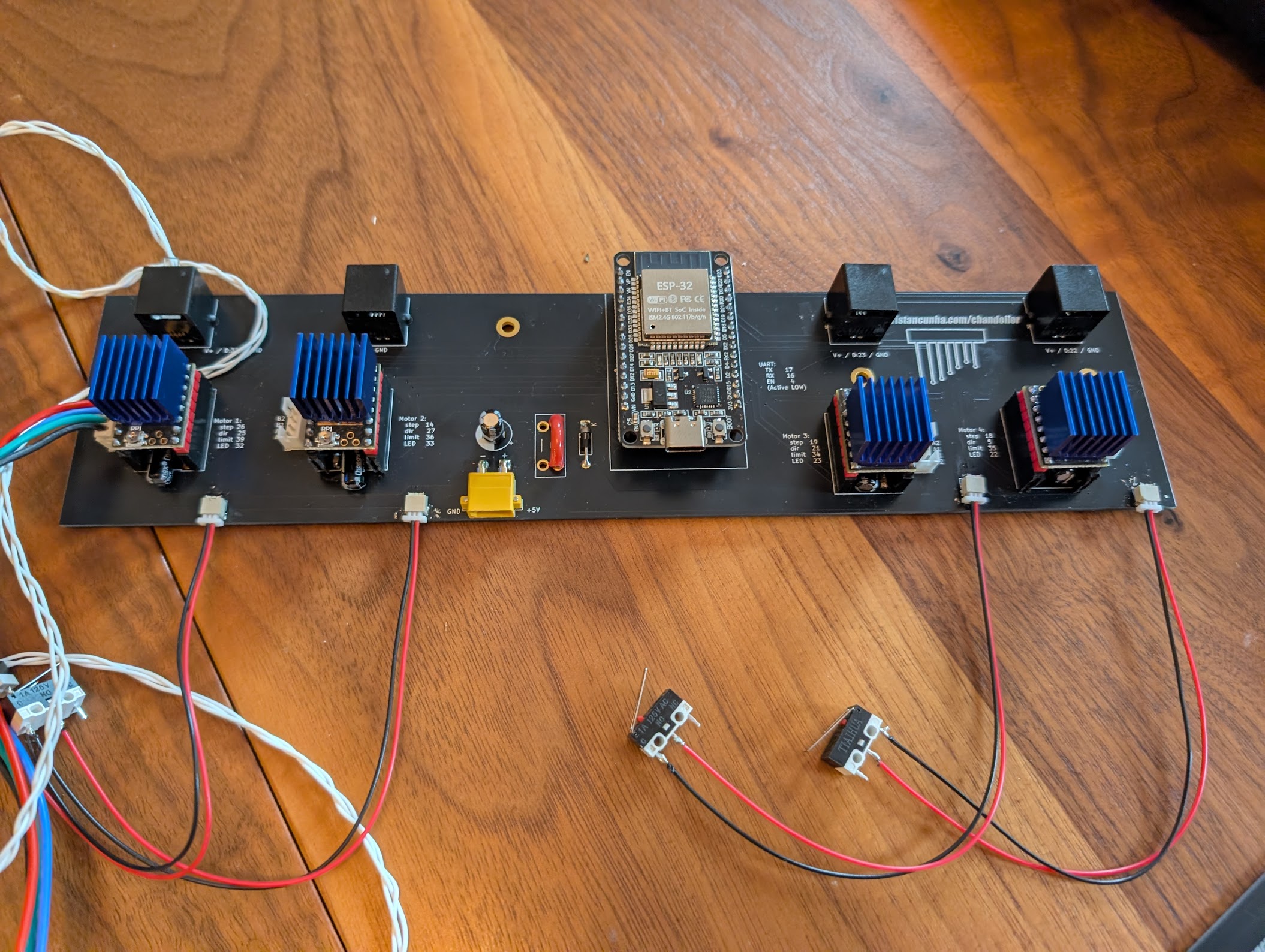
I'm using NEMA 17 stepper motors now, which are way overkill, but are actually available for a reasonable price used (from old 3D printers), and the cost of the excellent TMC2209 motor drivers has come down a lot. This combination means I can run the steppers silently and very efficiently.
I've also switched the connectors on the PCBs and am using RJ11 6P4C connectors — the old-fashioned connectors from a home phone. They work great with the 32-gauge silicone-coated wires I'm using for the lights.
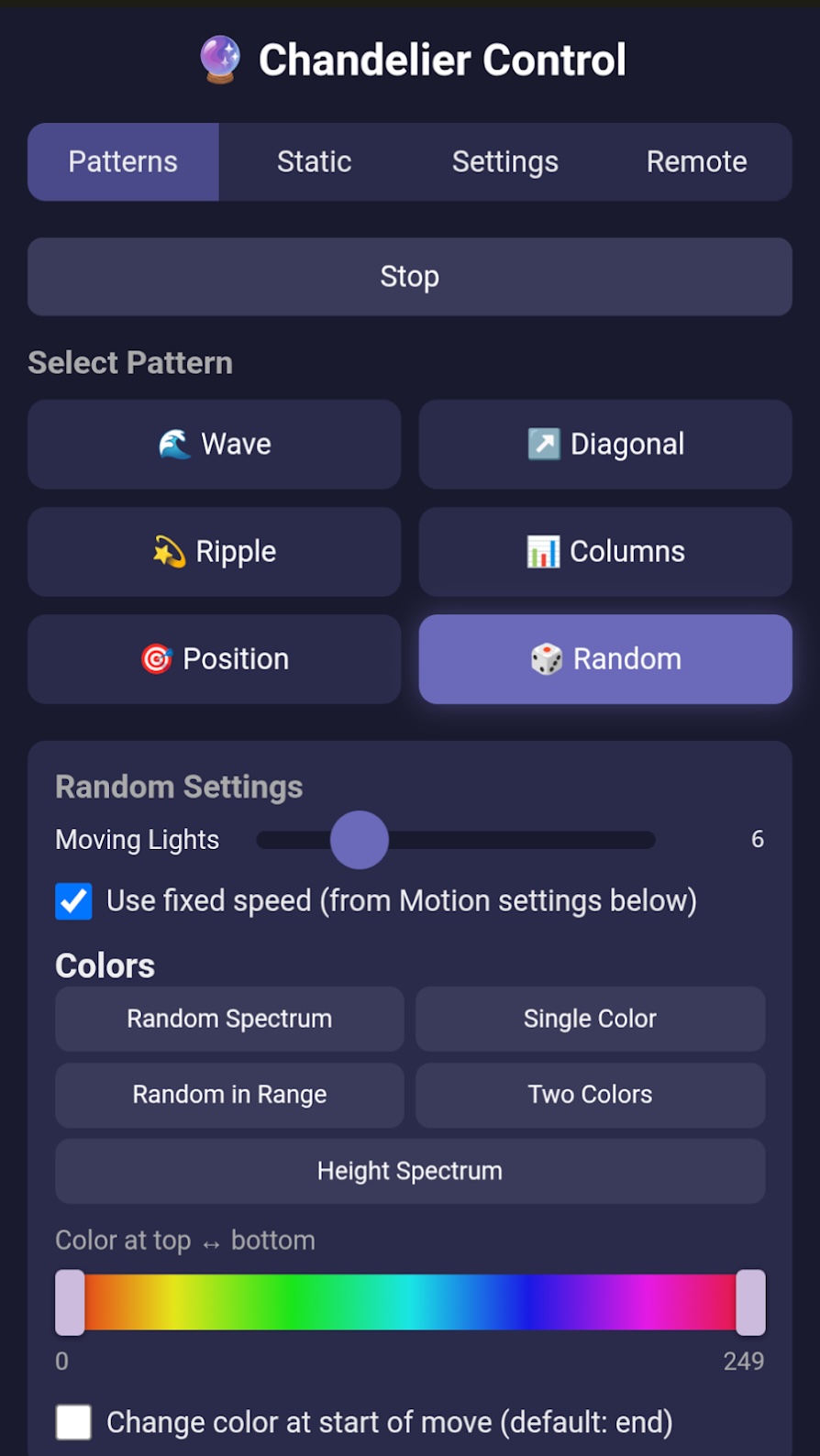
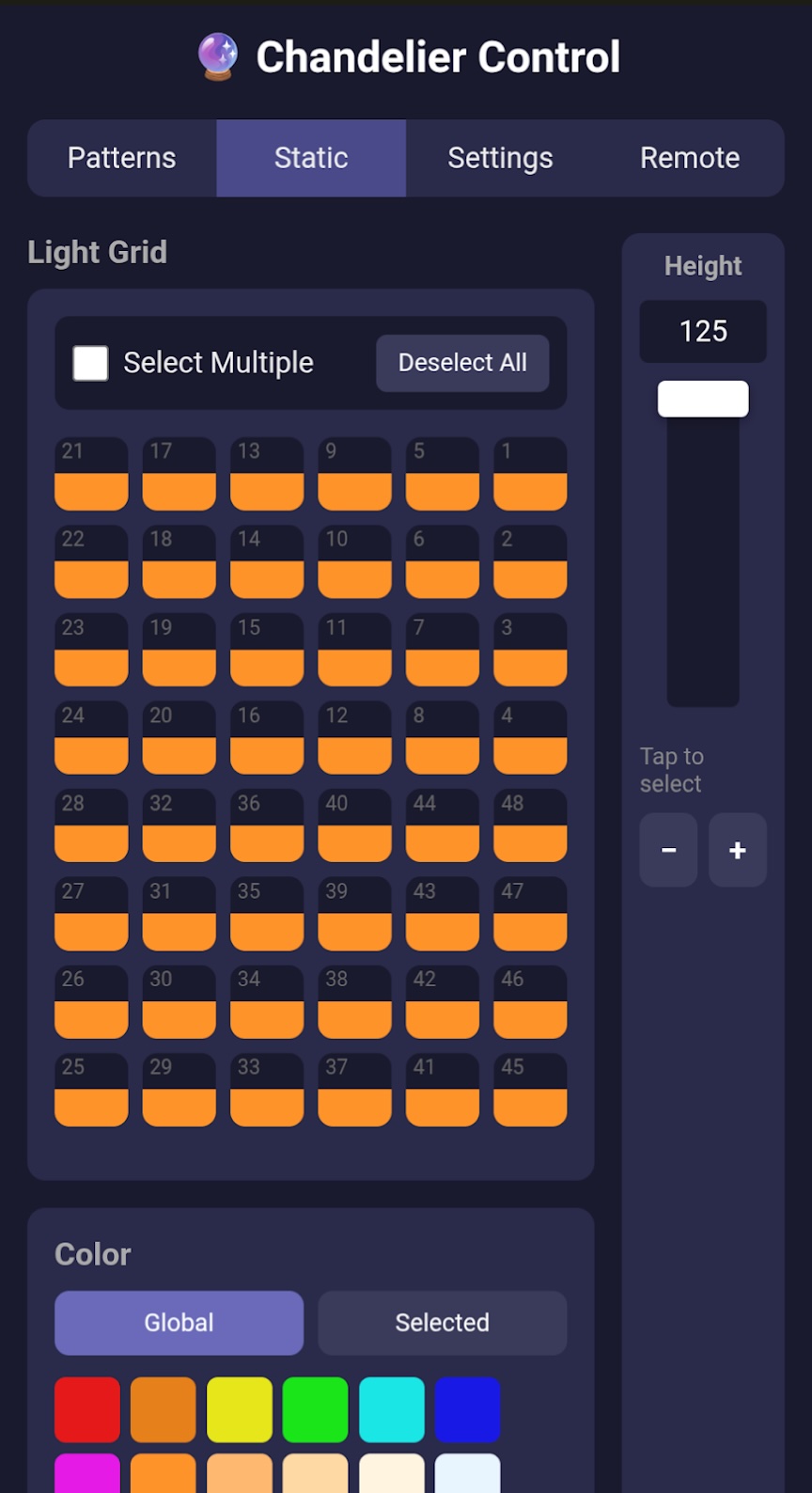
Instead of a Teensy running a bunch of motors, I'm now using an ESP32 dev module to run 4 motors on each PCB, and synchronizing movement with a master ESP32 connected over ESP-NOW. And since the ESP32 has Wi-Fi built in, the chandelier hosts its own network and a web page where all the patterns can be edited and saved.
It's all a bit of overkill, but it's worth it. It's been running for hundreds of hours now with almost perfect reliability. And it's silent too.
Kinetic Chandelier
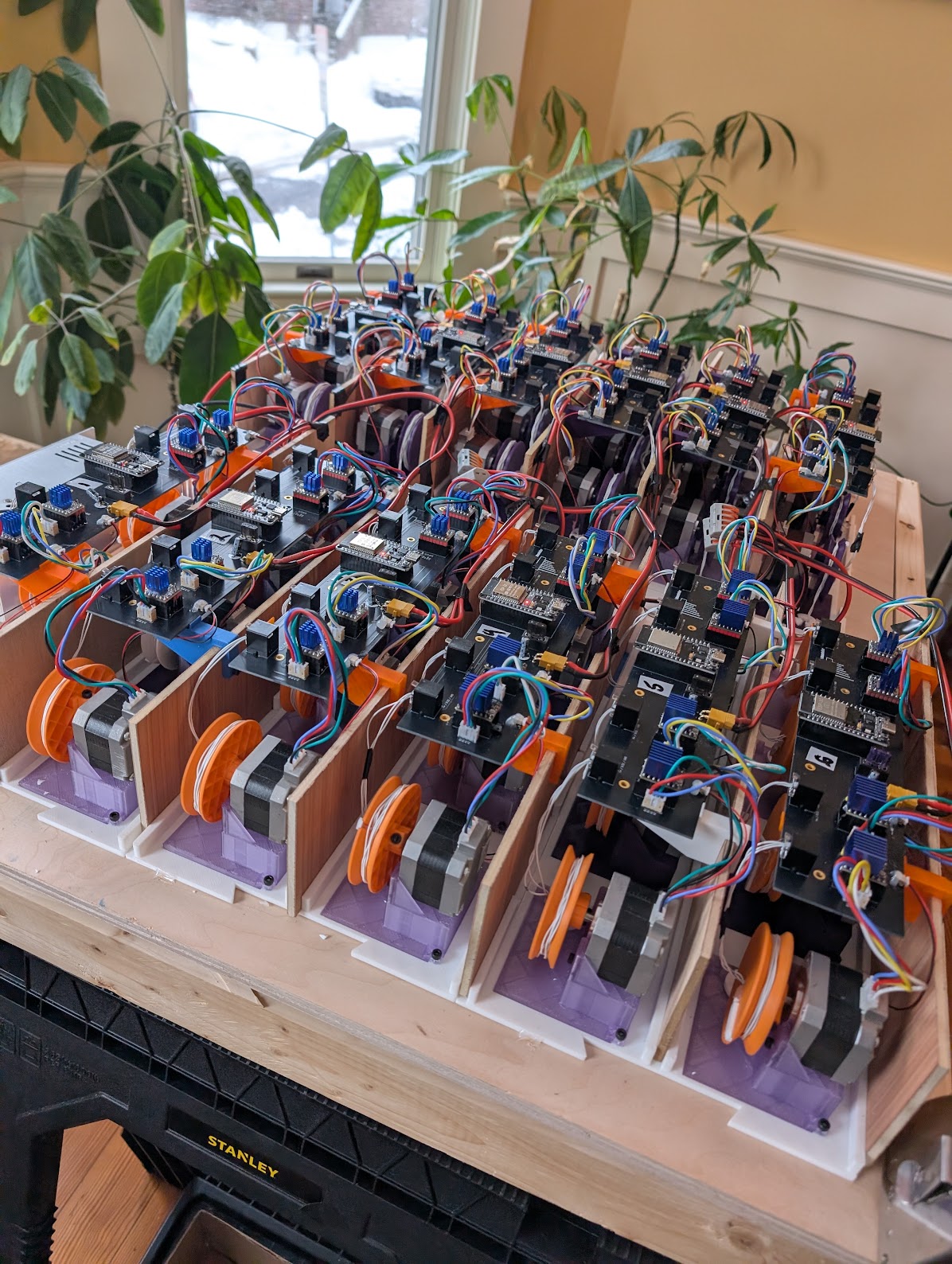
Version 1.0It was supposed to be a chandelier for the entryway, but it was pretty unreliable, and didn't make much light and kind of noisy for a light fixture. But it was pretty to look at.
This is my longest running project, and the first one that taught me a lot about PCB design, soldering, 3D printing and coding for microcontrollers.
It was shown at the 2023 Art, Tech, Psyche symposium and then on display in the Harvard Science Library for the spring semester that year. It took a lot of work to make it reliable enough to run for weeks on end, and it was still mostly all running by the end.
Construction
- 35 individually addressable LEDs, each one in a ping pong ball
- 35 pulleys with individual stepper motors
- 7 custom PCBs with stepper motor drivers and I2C connections for 6 microcontrollers
- It uses Teensy 3.5 microcontrollers, which aren't made anymore, but are great. Small, cheap, reliable and very fast.
- A lot of hot glue, cardboard and electrical tape.
- It runs through a set of different patterns, all with some random element, so it'll never repeat exactly


